
Breaking
Latest tech news from South Africa and around the world•Stay updated with breaking technology developments•Innovation and digital transformation news•AI, gaming, and gadget updates daily•Crypto and fintech news from Africa•
 SA Tech News Desk
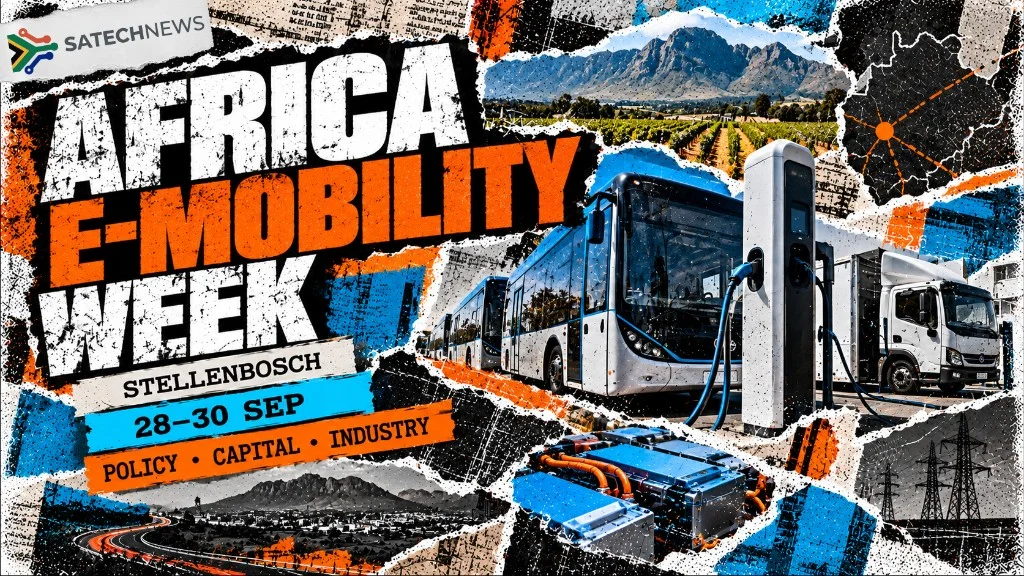
Africa E-Mobility Week is under way in Stellenbosch, putting local manufacturing, charging, finance and EV deployment under scrutiny.
Africa E-Mobility Week is under way in Stellenbosch, bringing policy makers, investors, manufacturers and mobility operators together as the continent tries to move electric transport from pilots into deployment.
The 2026 forum runs from 28 to 30 September at Nooitgedacht Estate, with the main forum and exhibition on Monday and Tuesday followed by industry tours in Cape Town and the Western Cape on Wednesday.
For South Africa, the most useful part of the agenda is not the broad case for electric vehicles. It is the harder industrial question: how much of the charging equipment, vehicle assembly, battery value chain, software and supporting infrastructure can be built locally rather than imported.
The Africa E-Mobility Alliance says the transition is entering an execution phase. The programme spans policy, finance, charging, batteries, public transport, fleets, manufacturing and infrastructure.
A Tuesday session specifically examines e-mobility as a platform for regional growth and industrialisation, with participation from the CSIR, GreenCape, MellowVans and the Atlantis Special Economic Zone ecosystem.
That puts local manufacturing and supply chains directly into the discussion. South Africa already has a substantial automotive manufacturing base, but electrification changes the component mix and infrastructure requirements around that industry.
The event is co-convened by the Africa E-Mobility Alliance with the African Union Commission, the United Nations Environment Programme and the UN Economic Commission for Africa. The Mitigation Action Facility describes the forum as a meeting point for policy dialogue, investment, technical exchange and implementation partnerships.
Hosting the forum in the Western Cape gives local firms and public institutions a chance to put actual projects in front of continental investors and policy makers. The exhibition covers vehicles and fleets, batteries, charging and energy, public transport, digital systems, manufacturing and deployment services.
But conferences do not close the economics on their own. South African buyers still have to weigh vehicle prices, charging access, grid constraints and residual-value risk, while manufacturers need enough demand and policy certainty to justify local production.
The industry tours on 30 September should provide a more concrete view of what is already operating in the Western Cape. The stronger test comes later: announced factories, charging deployments, fleet orders, financing structures and component contracts.
Stellenbosch can concentrate the people who make those decisions. Whether that produces a larger South African share of Africa’s e-mobility value chain remains the unresolved part.
Source: SA Tech News


