
Breaking
Latest tech news from South Africa and around the world•Stay updated with breaking technology developments•Innovation and digital transformation news•AI, gaming, and gadget updates daily•Crypto and fintech news from Africa•
 SA Tech News Desk
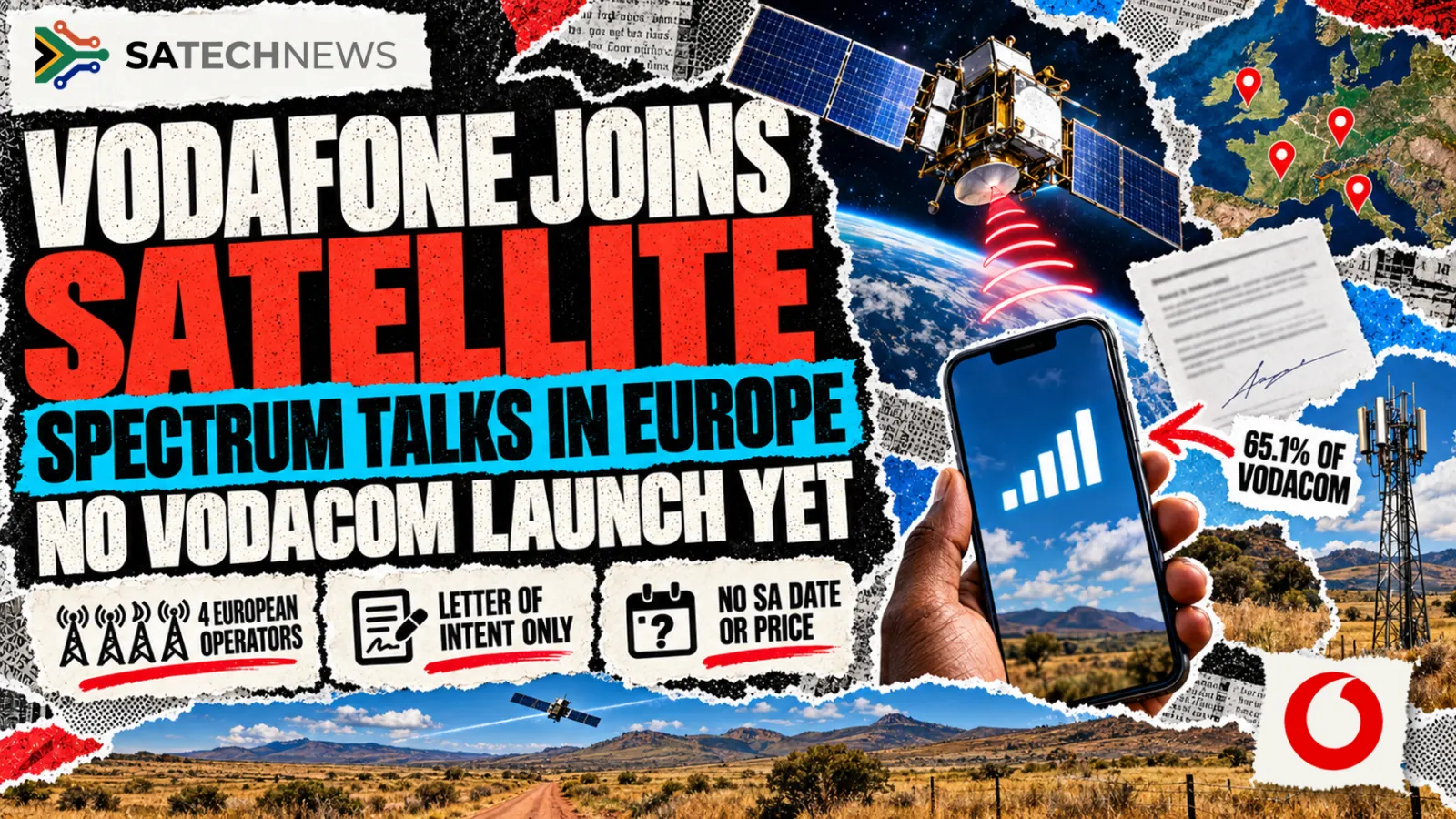
Vodafone and three European operators are exploring a satellite-spectrum bid. The plan is European, with no announced South African Vodacom launch.
Vodafone has joined Deutsche Telekom, Orange and Telefónica in signing a letter of intent to explore a joint bid for mobile satellite spectrum in Europe. The proposal concerns direct-to-device connectivity, where ordinary mobile phones could communicate through satellite-supported networks in areas without terrestrial coverage.
For South African readers, the connection is Vodafone’s majority ownership of JSE-listed Vodacom. Vodacom’s investor information puts Vodafone’s holding at 65.1%. That corporate link does not mean a South African service has been announced.
The operators’ 19 October statement describes an exploratory agreement, not a completed spectrum purchase or a commercial launch. They say the intended European model would offer mobile operators open, non-discriminatory access to direct-to-device services.
The four companies propose to develop ground infrastructure, coordination and monitoring functions in Europe. They do not plan to build a satellite constellation themselves. Instead, the satellite component would come from a partner that has not yet been selected.
The initiative is framed around Europe’s control of critical communications infrastructure and the resilience of networks in places that conventional mobile towers cannot reliably serve. The companies also say the agreement does not replace existing satellite partnerships.
That leaves several steps between the announcement and a usable service: future spectrum allocation, a potential joint bid, a selected satellite partner, technical integration and commercial agreements. The partners have not published a firm launch timetable in the announcement.
Vodacom operates mobile networks in South Africa and several other African markets, where rural coverage and network resilience are relevant issues. Satellite-to-phone systems could eventually influence how mobile operators address those gaps.
But European mobile satellite spectrum rights do not automatically authorise services in South Africa. Any local deployment would face its own spectrum, regulatory and commercial requirements. No South African launch date, price, device compatibility list or ICASA approval accompanies this European statement.
Vodafone’s participation is therefore a strategic signal rather than a product announcement for Vodacom customers.
The immediate question is whether the European operators proceed to a formal bid and name their satellite partner. Until then, South Africans should treat claims of an imminent Vodacom satellite-phone service as unsupported.
Source: SA Tech News


