Breaking
Latest tech news from South Africa and around the world•Stay updated with breaking technology developments•Innovation and digital transformation news•AI, gaming, and gadget updates daily•Crypto and fintech news from Africa•
 SA Tech News Desk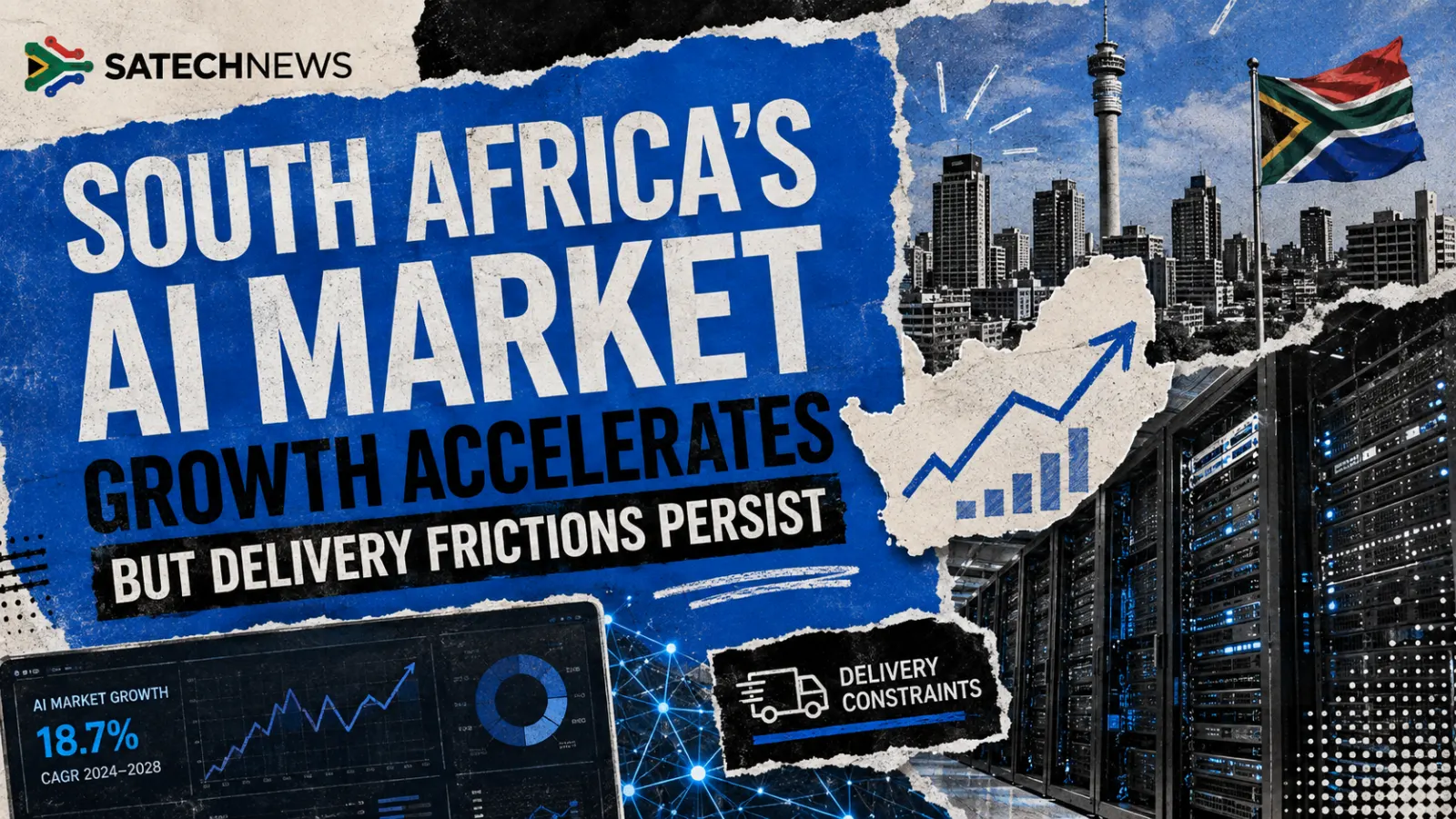
Analysts put South Africa's AI market above USD 800 million in 2024. Finance and government are adopting, but skills and governance lag.
Artificial intelligence has moved from pilot slides to production systems in South African banks, insurers and parts of the public sector. The question is no longer whether local firms will use AI, but whether they can deploy it reliably at scale.
Research firm IMARC Group estimates the South African AI market was worth about USD 809 million in 2024 and could exceed USD 6 billion by 2033, implying compound growth above 22% annually. Forecasts of that magnitude deserve scrutiny, they assume continued enterprise spend, workable regulation and infrastructure that many firms still lack.
Financial services remain the heaviest users. Banks apply machine learning to fraud detection, credit scoring and customer routing. SARS and other state entities have trialled automation for document processing and risk scoring. Large insurers use predictive models on claims and underwriting.
The pattern is familiar: organisations with data, budget and compliance teams move first. Mid-tier firms follow more slowly.
Three constraints keep appearing in local implementations.
Skills. There is a shortage of engineers who can move models from notebook to monitored production. Training programmes exist, including industry-backed initiatives, but throughput remains lower than demand.
Infrastructure. Cloud access is not the bottleneck it was five years ago, but latency, data residency expectations and the cost of GPU capacity still shape architecture decisions, especially outside Gauteng and the Western Cape.
Governance. POPIA, sector regulators and internal risk committees can slow deployments that would ship faster in less regulated markets. That is not necessarily wrong; it is simply a cost of doing AI in South Africa.
IMARC's long-range figure embeds optimistic adoption curves. It does not fully price policy delay, load-shedding-era infrastructure habits, or the possibility that global model providers change pricing or access terms.
For South African CIOs, the practical takeaway is narrower: budget for AI as an operational line item, not a one-off project. The market is growing, but delivery still depends on people, power and process, not slides.
Banks and insurers still write the biggest cheques. Fraud models, claims triage and chat routing are no longer experiments; they are line items. Retail and logistics follow with demand forecasting and route tools, often rented from global cloud vendors rather than built in-house.
Municipal and national departments move slower. Pilot announcements outrun production systems. Where projects stick, they tend to be document processing and risk scoring with clear audit trails, not open-ended generative tools sitting on citizen data.
Treat AI as operations, not a once-off innovation sprint. Budget for monitoring, model refresh, vendor lock-in reviews and POPIA assessments alongside licences. The IMARC-style growth curves assume those costs get paid. Many mid-market South African firms still treat them as optional.
Power and connectivity habits from the load-shedding years also linger. Teams that learned to keep critical systems offline-tolerant are slower to put latency-sensitive inference in the critical path, even when the maths looks fine on a slide.
Source: SA Tech News