
Breaking
Latest tech news from South Africa and around the world•Stay updated with breaking technology developments•Innovation and digital transformation news•AI, gaming, and gadget updates daily•Crypto and fintech news from Africa•
 SA Tech News Desk
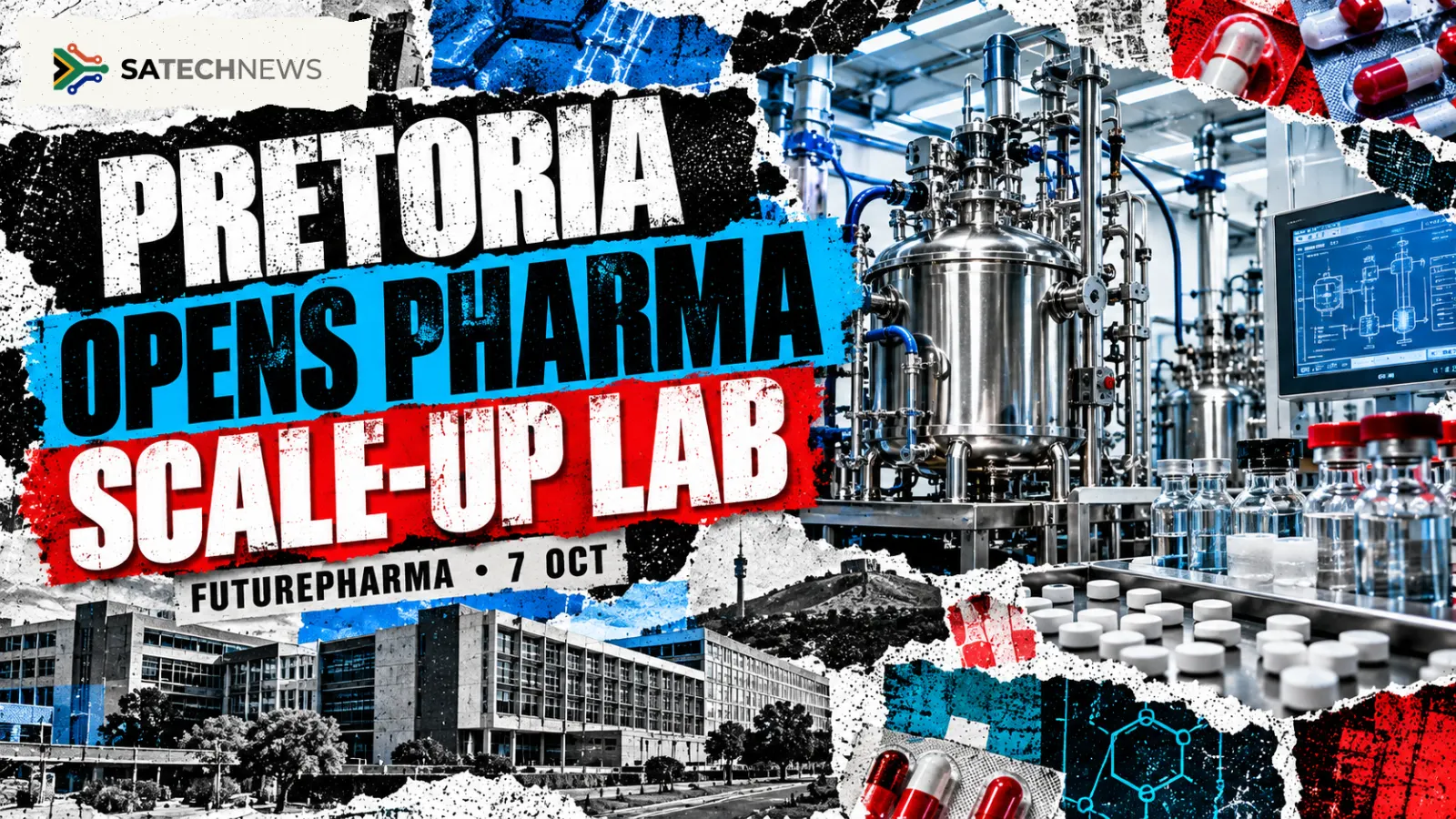
CSIR FuturePHARMA launches in Pretoria today as an open-access facility for API development, scale-up and local pharmaceutical manufacturing.
South Africa's CSIR formally launched its FuturePHARMA facility in Pretoria on 7 October, creating an open-access site intended to move pharmaceutical research closer to commercial manufacturing.
President Cyril Ramaphosa officiated at the CSIR International Convention Centre. The Presidency and CSIR both confirmed the date, venue and purpose ahead of the event.
For South Africa, the technology story is the gap between laboratory research and industrial production. FuturePHARMA is designed to give researchers, innovators and industry partners access to specialised infrastructure for developing, scaling and transferring pharmaceutical technologies.
The CSIR says FuturePHARMA will support work on active pharmaceutical ingredients, or APIs, as well as other pharmaceutical technologies.
APIs are the biologically active components in medicines. South Africa imports a large share of the pharmaceutical inputs used by local manufacturers, which leaves the country exposed to currency moves, international supply disruptions and concentrated overseas production.
FuturePHARMA is intended to provide infrastructure between early research and full commercial manufacturing, where promising technologies often struggle to progress.
That includes scale-up work, manufacturing development, technology transfer and skills development — the expensive middle stage that universities and startups often cannot fund alone, and that commercial plants will not touch until the process is proven.
An open-access model matters if private companies and public researchers can actually book capacity without waiting years. A facility that exists mainly as a CSIR showcase will not change import dependence.
The launch is confirmed. The useful evidence comes after the ribbon cutting.
The questions are how many projects enter the facility, which technologies reach commercial production, what capacity is available to private companies and universities, and whether local API work becomes economically competitive with imports.
South Africa has repeatedly identified pharmaceutical localisation as an industrial and health-security priority. The difficult part is converting research capacity into products that can be manufactured at reliable quality and sustainable cost.
Covid-era vaccine and therapeutics debates made that gap public. FuturePHARMA is a response to that lesson: build the scale-up kit before the next emergency. Whether it works will show in APIs that leave Pretoria for a registered medicine, not in a presidential programme.
FuturePHARMA is not a consumer health app or another digital-health platform.
It is physical technology infrastructure: laboratories, process development, manufacturing systems and specialist expertise intended to shorten the path from research to production.
That gives it relevance beyond health policy. Local pharmaceutical manufacturing touches industrial policy, university commercialisation, biotechnology startups and South Africa's preparedness for supply shocks and future health emergencies.
It also sits next to Aspen, Biovac and other local manufacturing stories that have already shown how hard it is to keep plants busy when procurement and global pricing pull the other way. Scale-up capacity without offtake is a building with expensive equipment.
Skills are the quieter constraint. Process chemists, validation specialists and quality staff are scarce. If FuturePHARMA becomes a training pipeline as well as a kit of kit, that may matter as much as any single molecule.
The launch should have provided more detail on operating capacity, access rules, industry partners and the first technologies moving through the facility.
Those details will determine whether FuturePHARMA functions as a genuinely shared scale-up platform or remains primarily a public research asset.
Watch who gets booking priority: CSIR programmes, university spinouts, or established manufacturers wanting overflow capacity. Watch the first published API or process that moves from FuturePHARMA into a SAHPRA-registered product. Watch whether rand costs can compete with Indian and Chinese supply for anything beyond niche or strategic molecules.
The facility opens with a clear mandate. What is not yet clear is how quickly that mandate will produce locally manufactured APIs and medicines at commercial scale.
The Wire Room test is industrial: projects in, products out, and a booking process private companies will actually use. Until those numbers exist, FuturePHARMA is important infrastructure with an open question attached.
Pretoria's research cluster already houses CSIR labs and university programmes. FuturePHARMA only changes the map if industry treats it as a booking destination rather than a tour stop.
Localisation rhetoric has outrun execution for years. Import APIs remain cheaper for many molecules. A public scale-up site can change that for strategic drugs if procurement, SAHPRA pathways and offtake align. Without that triangle, the equipment stays underused.
The presidency's attendance raises the political stakes. It also raises the risk of a launch narrative that outruns the first commercial batch. Ask for the first project list publicly within a quarter. That is the useful metric.
A launch day is a photo opportunity. An operating facility is a booking calendar, a staffing plan, and a first paid project with a named molecule and a named client. FuturePHARMA needs the second definition within the year, not another ribbon.
Watch three signals. First, whether CSIR publishes a transparent access process for local manufacturers and universities. Second, whether SAHPRA engagement is built into project scoping so scale-up work does not die at the regulatory wall. Third, whether any of the first clients are South African firms rather than visiting multinationals using Pretoria as a demo stop.
Africa's API and formulation gap will not close because one site exists. It closes when offtake, skills and capital line up around that site. The Wire Room will treat FuturePHARMA as real when the first commercial batch ships under a local offtake agreement — not when another speech calls it strategic.
Source: SA Tech News


