
Breaking
Latest tech news from South Africa and around the world•Stay updated with breaking technology developments•Innovation and digital transformation news•AI, gaming, and gadget updates daily•Crypto and fintech news from Africa•
 SA Tech News Desk
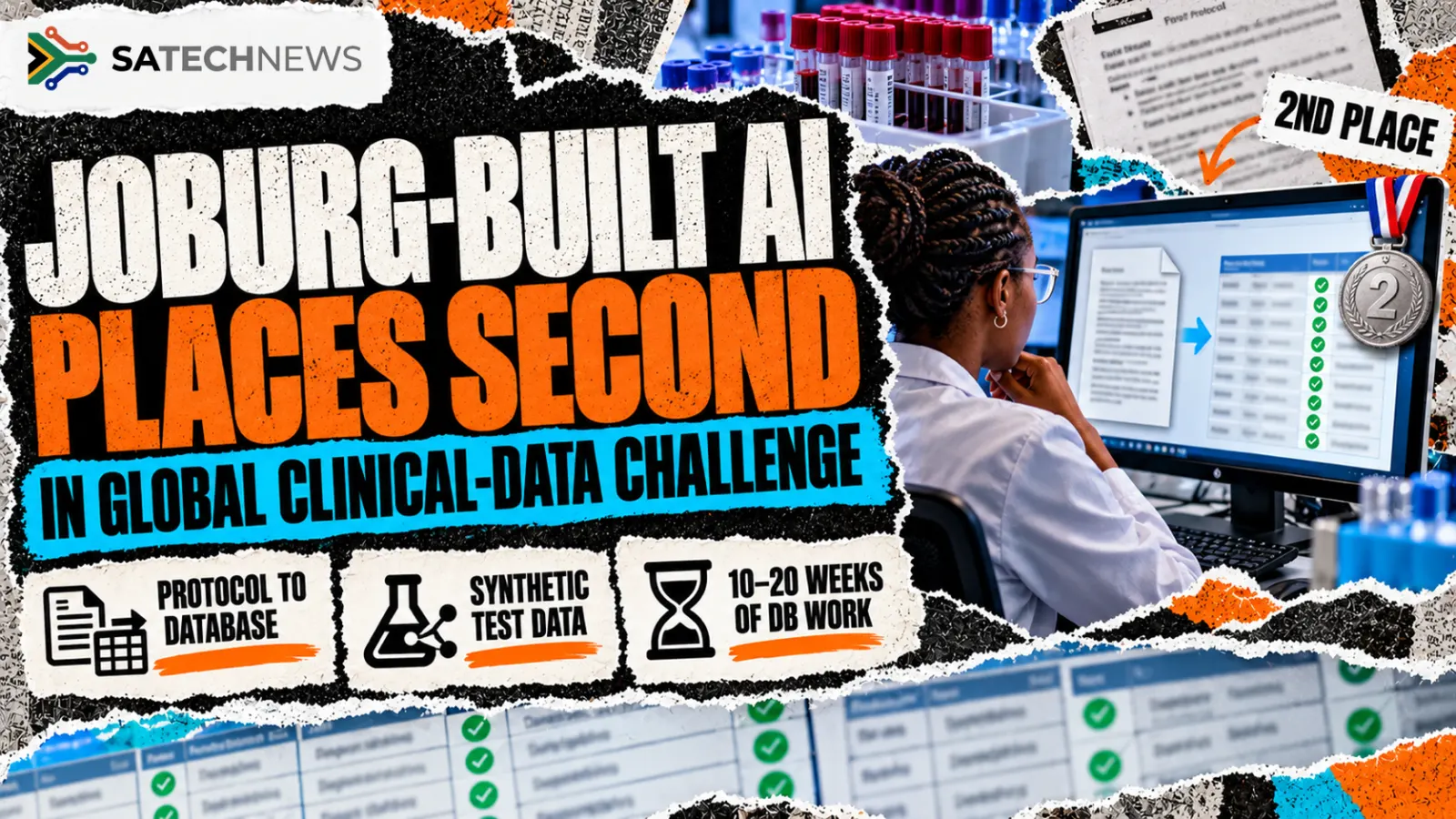
Johannesburg's BioInformatiCo placed second in a CDISC challenge for Leova, a clinical-trial data tool. Its performance claims still need testing.
A Johannesburg-developed clinical research tool has finished runner-up in an international artificial intelligence challenge focused on the technical work that happens before clinical trial data can be trusted.
BioInformatiCo's Leova placed second in the 2026 CDISC AI Innovation Challenge category for synthetic-data generation and automated testing. CDISC's published results identify Novartis and Amazon Web Services as the winners, with BioInformatiCo named runner-up.
The result is specific. It does not mean Leova has been certified to run clinical trials without human oversight or independently shown to shorten every study. It means judges recognised its approach to preparing and testing research data against a standards-based task.
Clinical studies need databases that capture participant observations consistently, enforce rules and flag errors. Before recruitment begins, teams convert study protocols into forms, validation rules and test cases.
Leova aims to automate part of that preparation. CDISC describes the entry as a tool that converts a protocol into the Unified Study Definitions Model and generates repeatable synthetic-data scenarios for testing study builds.
Synthetic data in this setting is test information, not a substitute for patient results. Its purpose is to probe whether database rules behave as expected before real participants' information arrives.
BioInformatiCo told ITWeb that building and validating clinical databases can require 10 to 20 weeks of specialist work. The company also cited one internal study in which testing and validation effort fell from five days to one. That is a company-reported example, not an independently verified industry benchmark.
South African universities, contract research organisations and clinical trial sites have a practical interest in reducing avoidable data-management costs. Research programmes in HIV, tuberculosis and vaccines can be complex, and delays in preparing a database consume specialist time.
BioInformatiCo says it works across sub-Saharan African clinical studies and plans to expand internationally. The company also intends to seek seed investment in the coming months. No completed round or funding amount has been confirmed in the available reporting.
CDISC's challenge evaluates standards integration, technical feasibility and impact. Its official results confirm the placement, while the organiser's programme names BioInformatiCo representatives Shirley Collie and Robert Kieser as presenters.
The next questions are commercial and technical: how Leova performs across different protocols, how often generated rules need correction, what independent validation finds and how the product is priced for local research teams.
Source: SA Tech News


