Breaking
Latest tech news from South Africa and around the world•Stay updated with breaking technology developments•Innovation and digital transformation news•AI, gaming, and gadget updates daily•Crypto and fintech news from Africa•
 Tech Team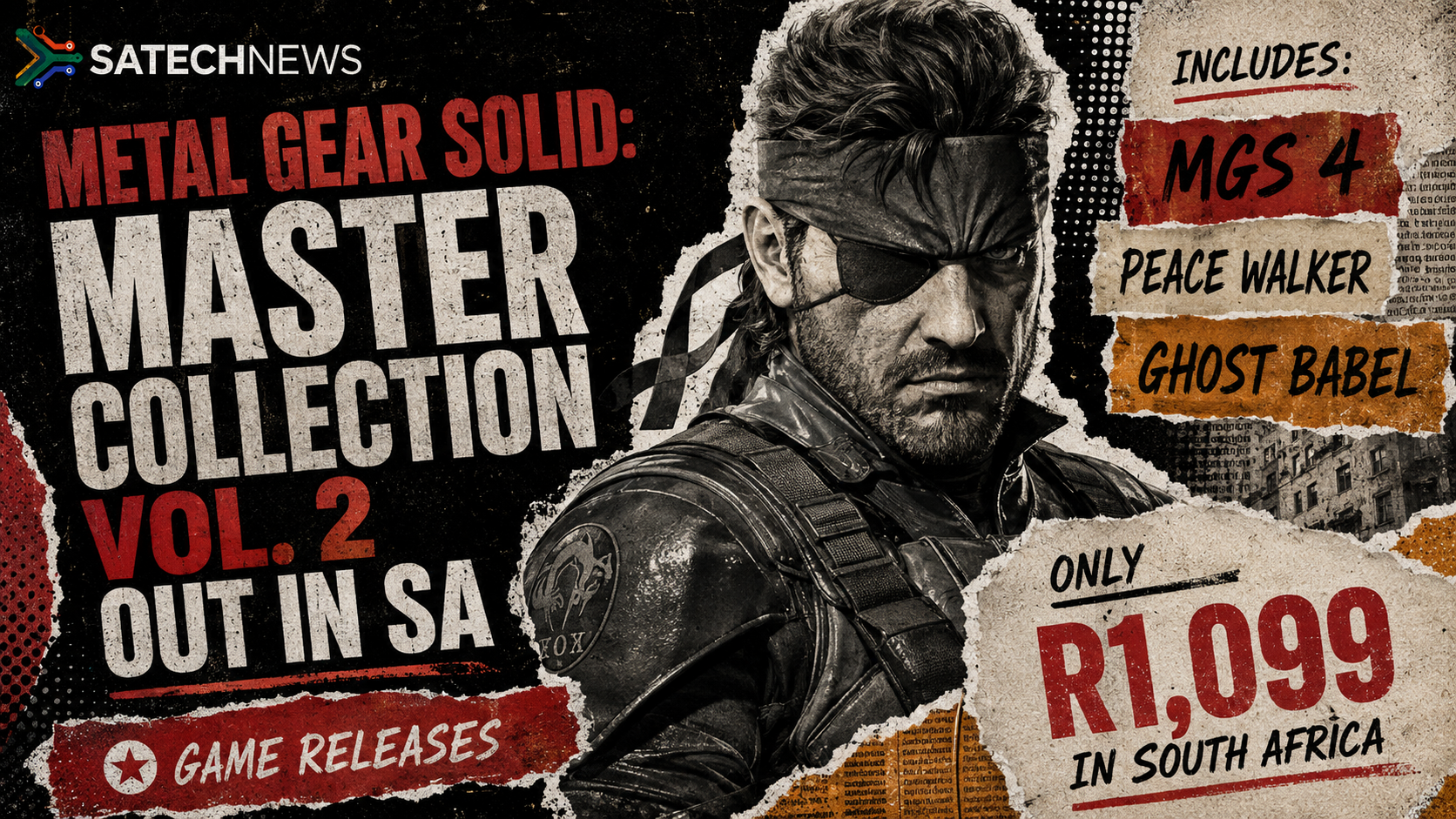
Konami’s second Metal Gear archive collection has launched, bringing Metal Gear Solid 4 and Peace Walker to current platforms, with local Switch pricing at R1,099.
Konami has released Metal Gear Solid: Master Collection Vol. 2, finally moving Metal Gear Solid 4: Guns of the Patriots off the PlayStation 3 generation and onto current consoles and PC.
The collection launched worldwide on 27 August for PlayStation 5, Xbox Series X|S, Nintendo Switch, Nintendo Switch 2 and Steam.
South Africa’s official Nintendo store lists the physical Day One Edition at R1,099.
The package is built around two major games: Metal Gear Solid 4: Guns of the Patriots and the HD Collection version of Metal Gear Solid: Peace Walker. Metal Gear: Ghost Babel is included as bonus content, along with a second digital soundtrack and a collection of archival material.
For longtime fans, however, Metal Gear Solid 4 is the reason this release matters.
Metal Gear Solid 4 launched in 2008 as a PlayStation 3 exclusive and remained tied to that hardware for almost two decades.
That made it increasingly awkward to play legally as original consoles aged and modern platforms moved on.
The game closes much of Solid Snake’s story and is one of the most technically peculiar entries in the series, built around the PS3’s unusual Cell architecture and packed with long cinematic sequences.
Moving it to modern hardware therefore solves both a preservation problem and a practical one.
Konami says the collection brings enhanced versions of its included titles to current platforms. The company has also bundled screenplay books and Master Books that collect story, character and historical information around the games.
Peace Walker is the other substantial inclusion.
Originally released for PSP before receiving an HD console version, it follows Big Boss after the events of Metal Gear Solid 3 and introduces systems around base building, staff recruitment and mission structure that would later become central to Metal Gear Solid V.
Metal Gear: Ghost Babel is the stranger inclusion.
Released for Game Boy Color in 2000, it is a separate take on Metal Gear rather than a direct continuation of the main Solid storyline.
Its presence makes Vol. 2 more interesting as an archive rather than merely a two-game remaster package.
Konami is also including a database spanning information from earlier Metal Gear titles through Metal Gear Solid 4, plus digital books and soundtrack material.
That is consistent with the wider Master Collection approach: preserve the games, but also preserve enough context around them that new players can understand where they fit.
R1,099 is not trivial for a package of older games.
The value depends heavily on how badly someone wants modern access to MGS4.
Peace Walker has been available through earlier releases, while Ghost Babel is a bonus rather than a full-price draw for most players. MGS4, by contrast, has been effectively stranded for years.
For South African players without a working PS3, that makes Vol. 2 the easiest legitimate way to play an important part of the series.
Steam lists the collection at $49.99 internationally, which places the local Nintendo pricing broadly in premium-remaster territory rather than budget-compilation territory.
The collection also arrives after renewed interest in Metal Gear driven by the Master Collection project and Konami’s modern treatment of older entries.
The games industry is still bad at keeping its own history playable.
Hardware changes, licensing problems, abandoned storefronts and unusual console architectures can turn commercially successful games into software that effectively disappears.
Metal Gear Solid 4 became one of the more obvious examples because it was a major release in a famous series, yet remained difficult to access without original hardware.
That is why Vol. 2 is more significant than a typical nostalgia collection.
It does not need to reinvent the games. It needs to make them run reliably on hardware people can actually buy and keep them available when the next console generation arrives.
There will inevitably be arguments about visual quality, performance and whether the package justifies its price. Those are fair.
But the basic preservation win is difficult to dismiss.
A major chapter of Metal Gear history is no longer locked to one ageing console, and South African players can now buy it through current platforms rather than hunting for a used PS3 and a disc from 2008.
Source: SA Tech News