
Breaking
Latest tech news from South Africa and around the world•Stay updated with breaking technology developments•Innovation and digital transformation news•AI, gaming, and gadget updates daily•Crypto and fintech news from Africa•
 SA Tech News Desk
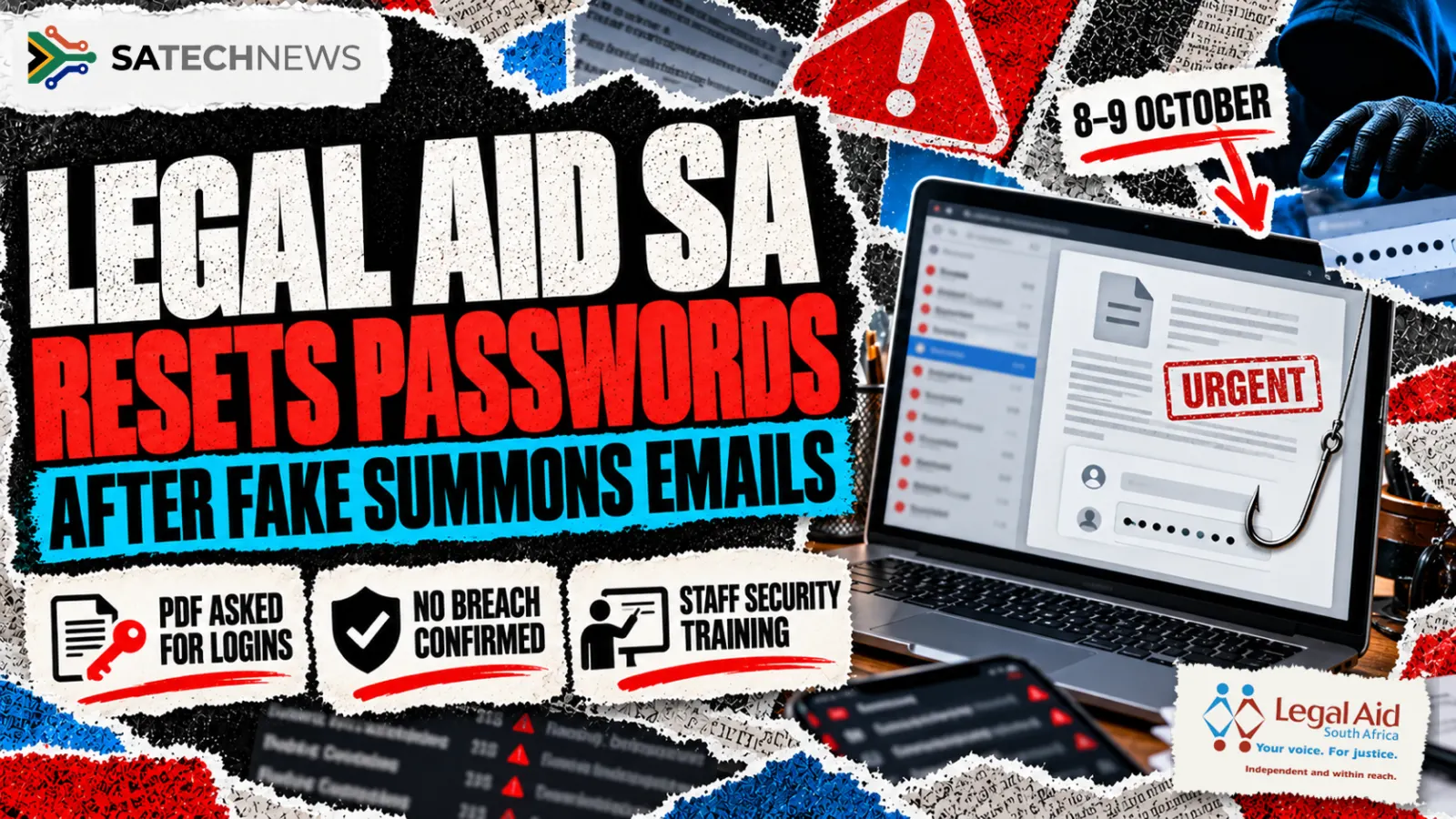
Legal Aid SA ordered password resets after fake NPA summons emails. It says no successful systems breach is known. No compromise has been confirmed.
Legal Aid South Africa has ordered employees to change their passwords after phishing emails disguised as summonses or final demands from the National Prosecuting Authority circulated on 8 and 9 October. The organisation says it is not aware of a successful breach of its systems or information.
The distinction matters for an agency handling sensitive legal matters for people who cannot afford private representation. A phishing attempt, a compromised employee account and the disclosure of client information are different events. None should be presented as proof of the next.
ITWeb reported on 20 October that the emails carried PDF attachments that prompted recipients to enter login credentials. It has not been established whether anyone supplied a password. Internal notices reviewed by the publication directed employees to reset their passwords and attend compulsory security training.
Spokesperson Pateka Quwe told ITWeb that Legal Aid SA was unaware of any successful attack compromising its IT systems or information. She described phishing and malicious email as risks its security teams routinely monitor.
The information systems department linked the password changes to the incident. Training dates listed in an internal notice were 13 and 27 October. The next scheduled session is therefore still ahead as of 21 October.
The Information Regulator told ITWeb it had not received a security-compromise notification. Under South Africa's Protection of Personal Information Act, reporting depends on whether there are reasonable grounds to believe personal information was accessed or acquired by an unauthorised party. An attempted credential theft does not automatically establish that threshold.
Legal Aid SA supports people whose access to legal representation may depend on its systems remaining available and trustworthy. Fraudulent legal-looking documents are particularly relevant to this environment: staff routinely handle formal notices and attachments.
There is no public evidence in the available reporting that attackers obtained case files, court records or client information. No attacker identity or public claim of responsibility has been confirmed.
Legal Aid SA also advertised a September tender covering secure connectivity, managed security and disaster recovery. The tender closed on 19 October. Its existence does not establish that the phishing incident prompted the procurement process; the notice preceded the incident.
It is not publicly confirmed whether staff submitted credentials, whether any accounts were subsequently accessed or who sent the messages. The organisation's position and the regulator's statement about notification should both be retained as the investigation develops.
A dated account of the investigation's findings would clarify whether the attempted credential theft became an actual compromise. Until then, the confirmed facts are a phishing incident and precautionary password resets, not a proven theft of legal-aid data.
Source: SA Tech News


