
Breaking
Latest tech news from South Africa and around the world•Stay updated with breaking technology developments•Innovation and digital transformation news•AI, gaming, and gadget updates daily•Crypto and fintech news from Africa•
 Tech Team
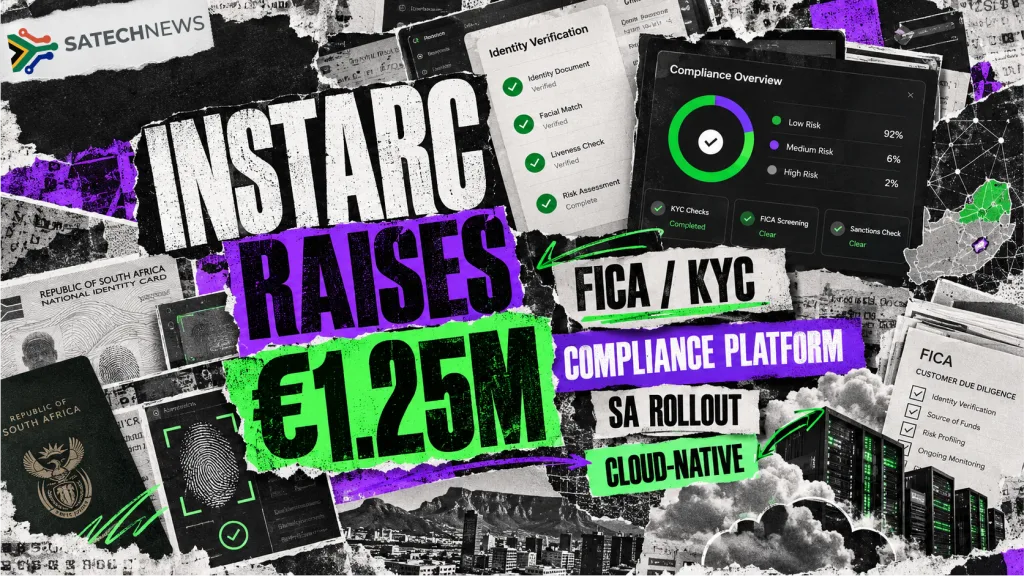
Tallinn-based Instarc raised €1.25 million, led by HFO Investments, to sell its cloud-native FICA/KYC compliance platform to South African accountable institutions.
Tallinn-based Instarc has raised €1.25 million to sell its cloud-native compliance platform to financial and other accountable institutions in South Africa.
The round was led by HFO Investments. Athena Capital and Option 3 Capital advised on the deal. Tech.eu reported the raise on 1 September. The company is initially focused on South Africa, where customer identification, due diligence and reporting sit under the Financial Intelligence Centre Act.
The platform covers digital onboarding, identity and ownership verification, customer due diligence, document management, regulatory reporting and audit records, with APIs into existing institutional systems.
Accountable institutions in South Africa already buy KYC and screening tools. What Instarc is selling is a cloud-native stack that claims to keep onboarding, ownership checks, document trails and regulatory reporting in one place rather than across disconnected vendors.
That pitch only works if the software fits FICA workflows and POPIA constraints. Identity and ownership data cannot be treated as a generic European SaaS export. Buyers will ask where data is hosted, who can access it, and how it moves to third-party verification services.
Local vendors already know FICA procurement cycles. A foreign entrant has to clear that trust gap before the €1.25 million becomes more than a marketing budget.
HFO’s lead cheque also signals that Baltic and Nordic capital is still willing to underwrite African compliance distribution bets. That capital is patient only while pipeline metrics appear. Without them, the next raise gets harder.
Instarc said the capital will accelerate commercial rollout among South African accountable organisations. It has not named customers, contract values or a live deployment count.
Switching costs are high. Compliance software sits on customer acquisition, legal risk and daily operations. Sales cycles are long because a failed onboarding tool creates regulatory exposure, not just IT inconvenience.
South African banks, insurers and payment providers already buy screening and onboarding tools. Consolidation pitches fail when they ignore how deeply those tools are wired into branch workflows and regulator questionnaires.
Instarc’s cloud-native claim has to survive procurement checklists that ask for audit trails, role-based access and clear POPIA processing agreements. Without named local reference customers, those checklists will keep the sales cycle long.
€1.25 million funds a sales push. It does not prove adoption. The next facts that matter are signed South African customers, working integrations with local banks and insurers, and whether case times fall without staff working around the system.
Until those appear, Instarc remains a funded market entry — not yet evidence that South Africa’s FICA stack is about to consolidate onto one Estonian platform.
Source: SA Tech News Desk


